Periodical Cicadas in Kentucky
ENTFACT-446: Periodical Cicadas in Kentucky
by D. W. Johnson, L. H. Townsend, and Ric Bessin Extension Specialists
University of Kentucky College of Agriculture
Spectacular broods of periodical cicadas, designated by Roman numerals, emerge at predictable intervals (13- or 17-years) across the eastern US. Representatives of both occur in the Commonwealth. The emergence of millions of these insects in an area provides a striking visual image and the sounds they produce can be deafening. They are produced by males using specialized structures on the abdomen. Males fly to high, sunlit branches and sing together in choruses that attract females. Songs of the different species are distinctive and include calling and courtship sounds.
Periodical cicadas have black bodies, red eyes, and red-orange wing veins in two pairs of clear wings that are held roof-like over the abdomen. These clumsy fliers often stay in the upper canopy of trees while they are active from late April thru June. Encounters with periodical cicadas can be unnerving to some but these insects cannot sting and do not harm humans, livestock, and pets.
Future Kentucky Periodic Cicada Broods
There are 6 main broods of the periodical cicada in Kentucky. The next emergence will be in 2029 with Brood I (17 yr) in parts of Harlan, Letcher, Pike and Martin counties only. This will be followed by Brood XXIII (13 yr) in 2031 emerging in the Purchase and Green River areas of Kentucky, then in 2033 Brood V (17 yr) will emerge in parts of Boyd, Greenup, and Lawrence counties. In 2037 Brood XIX (13 yr) will emerge in high numbers in parts of the Pennyrile and Green River areas with lower numbers for the Purchase and rest of the state. In 2038 Brood X (17yr) will emerge along the Tennessee border and Ohio River counties west of Cincinnati with a low potential across the state. The emergence in 2042 is the largest for the state. This is Brood XIV (17 yr) and will be a heavy emergence across most of the state east of the Purchase area.
While periodical cicada broods are predictable and can be forecast decades into the future, there is a bit of uncertainty with a relatively small number of periodical cicadas emerging in off years. These are small groups of individuals emerging 1 or more years early or late. These individuals are often referred to as stragglers. The maps and tables of periodical cicada emergence are limited to the main emergence of the broods and do not reflect these spurious broods regardless of their size.
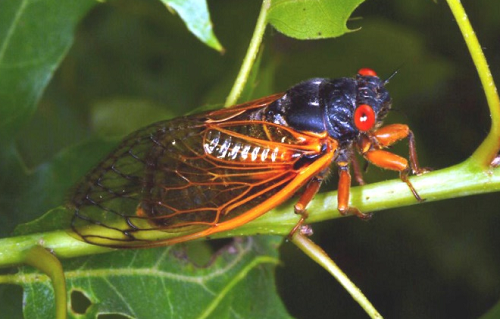
Figure 1. Periodical cicadas are recognizable by their color and emergence period early in the year.
Protecting Trees from Damage
Periodical cicadas are potential pests of many trees and woody ornamentals, with the exception pines and other species that produce gummy substances when damaged. These insects can cause problems in orchards, vineyards, nurseries, home and commercial landscapes. Physical injury or “flagging” occurs after females slit twigs to insert batches of eggs. Twigs break at these weak spots and are left to dangle, turn brown and die. This “pruning” is not a serious problem for large trees but can adversely affect the developing structure of small trees. A more subtle impact can occur several years later as growing nymphs remove sap from roots.
- New orchard or landscape plantings should be delayed until after periodical cicada activity has ended for the season.
- Young trees can be covered with netting or cheese cloth to protect the tender twigs. This should be done when the first male singing is heard. Secure the covering around the trunk to prevent cicadas from climbing up to the limbs. The netting should be removed at the end of June or when cicada activity stops.
- If practical, cicada nymphs can be prevented from feeding on roots of young trees by pruning out twigs with egg slits. This needs to be done within three weeks after egg laying has ended. Although a time-consuming process, it may be a viable alternative considering the production life and long-term value of backyard fruit trees. Feeding by large numbers of nymphs over several years can reduce the vigor of small trees.
- Insecticide applications generally are of limited use in protecting trees from damage, especially where cicadas are very abundant. Repeated treatment will be needed to deal with new arrivals. Orchards under a routine spray schedule should be treated about twice a week during peak cicada activity. Spray requirements will vary according to intensity of the outbreak, which can range from a few cicadas in some areas to massive numbers in other areas.
Life Cycle
Mature nymphs begin to emerge when the soil temperature reaches 64°F, usually in late April or early May. It takes about 3 weeks for all of them to come out. Just before leaving the soil, full-grown nymphs dig up to the surface and may build a 6" to 8" tall mud "chimney" similar to those formed by crayfish. After leaving the soil, nymphs crawl up any convenient vertical surface and molt to the adult stage, leaving behind an empty brown shell. After struggling out of the nymphal skin, adult cicadas rest for several hours until their bodies and wings have expanded and are dry and hard.
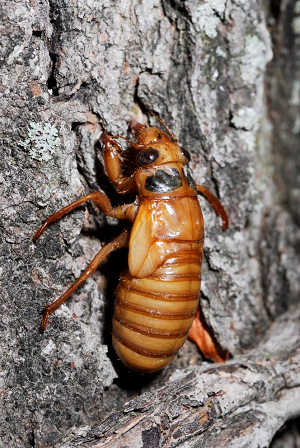
Figure 2. A periodical cicada nymph soon to molt to the adult stage.
After mating, females lay their small eggs in 1/4 to 1/2 inch diameter twigs. They tend to select and oak, hickory, apple, peach, or pear trees and grapevines but will use other species with the right twig diameter. A blade-like structure on the end of the abdomen is used to make a longitudinal slice in the selected twig. Eggs inserted in the slit will remain in the twigs for six to 10 weeks before hatching. The tiny nymphs fall to the ground and burrow into the soil in search of tree roots. They use their piercing-sucking mouthparts to take sap from tree roots.
Periodical Cicadas, Annual or Dog-day Cicadas, and Locusts
Periodical and annual cicadas or dog-day cicadas are similar but have distinct physical differences and are active at different times of the year. The annual cicada is nearly and inch longer than the periodical with green to black eye color rather than red. The wing veins and legs are green to black in color while the periodical is orange to red. Periodical cicadas emerge from late April through June while the annual cicada is active from July through September.
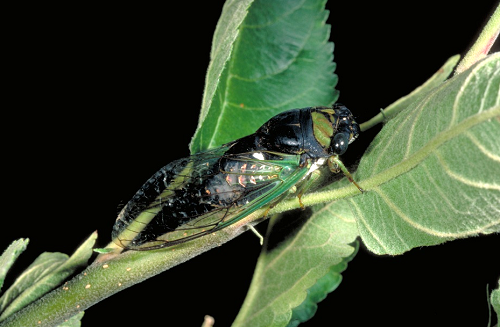
Figure 3. Annual or dog-day cicadas are larger, emerge later and are a different color than periodical cicadas.
References
- Hyslop, J. A. 1935. The Periodical Cicada. USDA Bull. E 364.
- Marlett, C. L. 1907. The Periodical Cicada. USDA. Bureau of Ento., Bull. 71.
- Simon, C. 1988. Evaluation of 13 and 17 year Periodical Cicadas (Homoptera: Cicadidae: Magicicada). Bull. ESA 34:163 176.
- Stannard, Jr., L. J. 1975. The distribution of periodical cicadas in Illinois. Biol. Notes #91. Il. Nat. Hist. Surv. Urbana, IL
- University of Michigan Cicada Page: http://insects.ummz.lsa.umich.edu/fauna/Michigan_Cicadas/Periodical/Index.html
Issued: 1/02
Revised: 1/26
CAUTION! Pesticide recommendations in this publication are registered for use in Kentucky, USA ONLY! The use of some products may not be legal in your state or country. Please check with your local county agent or regulatory official before using any pesticide mentioned in this publication.
Of course, ALWAYS READ AND FOLLOW LABEL DIRECTIONS FOR SAFE USE OF ANY PESTICIDE!
Images: University of Kentucky Entomology